
What's a copay? Your guide to health plan lingo
Insurance terms can be confusing and sound like another language, especially when it comes to health insurance. Read on for a crash course in translating health plan lingo so you can better understand your plan documents and benefits.
Understanding how you pay
Paying for health insurance isn't straightforward. Here's an explanation of how your out-of-pocket costs shape up during your plan year:
Premium: Just like car insurance or your cell phone bill, your premium is the bill you pay to have health insurance coverage. You'll pay it yourself if you buy your own insurance. And if you have a health plan at work, your employer pays it on your behalf, monthly, quarterly or yearly.
Deductible: This is generally how much you pay before your health plan pays anything. You can often find your deductible right in your plan name. For example, if you have a $4,500 deductible, you pay the first $4,500 before your plans kicks in.
Copayments: These are flat fees you pay for a covered healthcare service, like a lab test, provider visit, prescription or urgent care visit. For example, your plan may have a $50 copay for specialist visits as part of its benefits. Copays vary for in-network and out-of-network provider visits and services.
Coinsurance: This is your share of a medical bill after you meet your deductible. You may owe 40% for services, while your insurance company pays 60%. You'll keep paying that amount until you reach the maximum out-of-pocket (MOOP) listed in your plan. Percentages may differ for out-of-network coverage if your plan covers out-of-network services.
Maximum out-of-pocket (MOOP): This is the most you'll pay in any given plan year for ALL covered services before you plan pays 100% for covered expenses in that year. Once you hit your MOOP, the insurance company takes over. The combined amount you spend on your deductible, copays and coinsurance all add up to that amount. Note that you might have a separate max for in-network and out-of-next coverage.
Getting to know your plan
Knowing a few key terms and acronyms can help you navigate your provider network and keep your costs in check.
In-network: In-network providers have a contract with your health insurance carrier that specifies the rates they charge you. Generally, staying "in-network" for doctors, pharmacies and other services will cost you less than going out-of-network. The contract specifies an "allowed amount," which is the most a plan will consider paying for a covered service. That amount is generally lower than what a provider usually bills and you won't have to pay the difference with an in-network provider.
Out-of-network: These providers don't have a contract with your insurance company and using them may cost you more. HMO plans typically provide no coverage outside of the HMO network, except for emergency care. PPO plans do cover out-of-network care, but cost sharing is usually higher than in-network, with some exceptions, again, including emergency care. With out-of-network providers, you may be responsible for paying fees above the covered rate listed on your bill, a practice called balanced billing.
Primary Care Provider (PCP): This is the provider you see most often, who manages your day-to-day care, handles wellness visits and coordinates specialty care. PCPs can be any in-network healthcare provider in internal medicine, general or family practice, pediatrics or obstetrics/gynecology, and can be a doctor, certified nurse practitioner, physician assistance, or certified, licensed nurse-midwife.
Site of service: These are cost-efficient, high-quality locations that offer the best possible copays for services like labs, X-rays or imaging, without having to meet your deductible. These vary by plan, so check your plan details to find out whether you can save by using a specific lab or imaging location near you. If you are a Community Health Options Member, you can find likes to these providers in the Member portal or online provider directory.
HMO: This stands for "Health Maintenance Organization." In an HMO, you are required to choose an in-network primary care provider (PCP) to coordinate your care. Your PCP provides referrals to access specialists and other in-network services within the plan to help control costs. HMOs do not cover out-of-network care, except for emergency care.
PPO: This stands for "Preferred Provider Organization." PPOs may require you to choose an in-network PCP, but they offer both in-network and out-of-network benefits and rarely require a referral to allow you to see a specialist, although a specialist might require one before scheduling an appointment. Out-of-network cost sharing is generally higher an in-network, but you have access to a larger number of providers.
Note: Network information is related to planned care. If you have an emergency, don't wait or shop around. Get care right away. The federal No Surprises Act protects you from surprise bills for emergency care, even out-of-network.
Specific plan benefits vary, so please check your plan’s schedule of benefits for details. Have a question about Community Health Options or your benefits? Call our Maine-based Member Services team at (855) 624-6463, between 8 a.m. and 5 p.m., Monday through Friday.
Follow Community Health Options on Facebook, LinkedIn, TikTok or Instagram
Related Blog Posts

Five things to consider when looking for health insurance
Buying health insurance probably isn’t among the more exciting purchases you’ll ever make. But like it or not, it’s one of the most important. So, we want to help you get it right.

Comparing health plan prices? Estimate your yearly spending, too
It might be tempting to buy a health plan based on the lowest monthly premium, but if you do, you might be surprised by your out-of-pocket costs at the end of the year. When you compare plan prices, it’s important to estimate your upcoming yearly costs so you can find a plan that meets your needs.
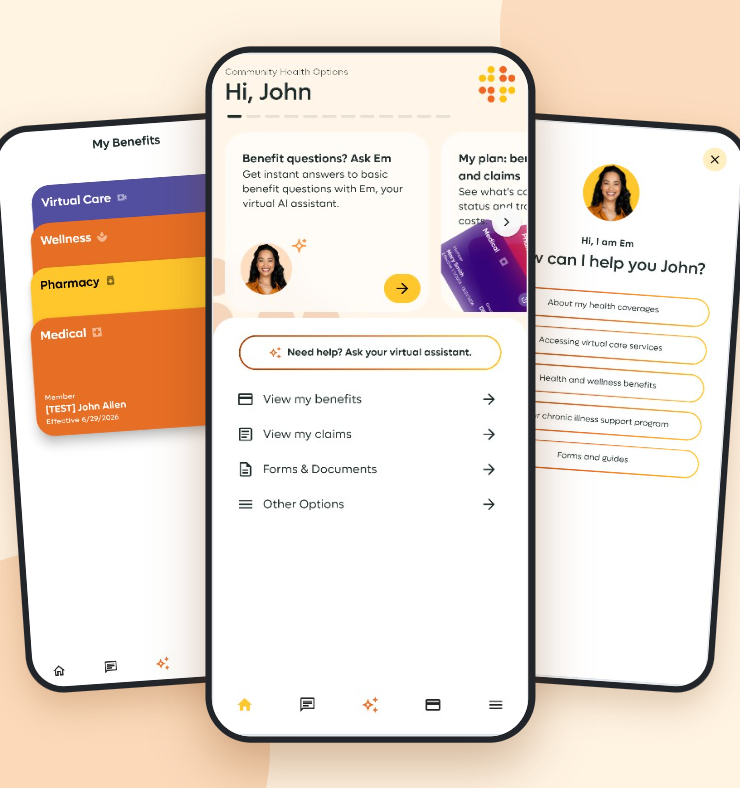
Coming soon: A simpler online tool to help Members manage their benefits
Community Health Options Members are about to get access to a new portal and mobile app so it's easier to find health plan information and understand their out-of-pocket costs.